
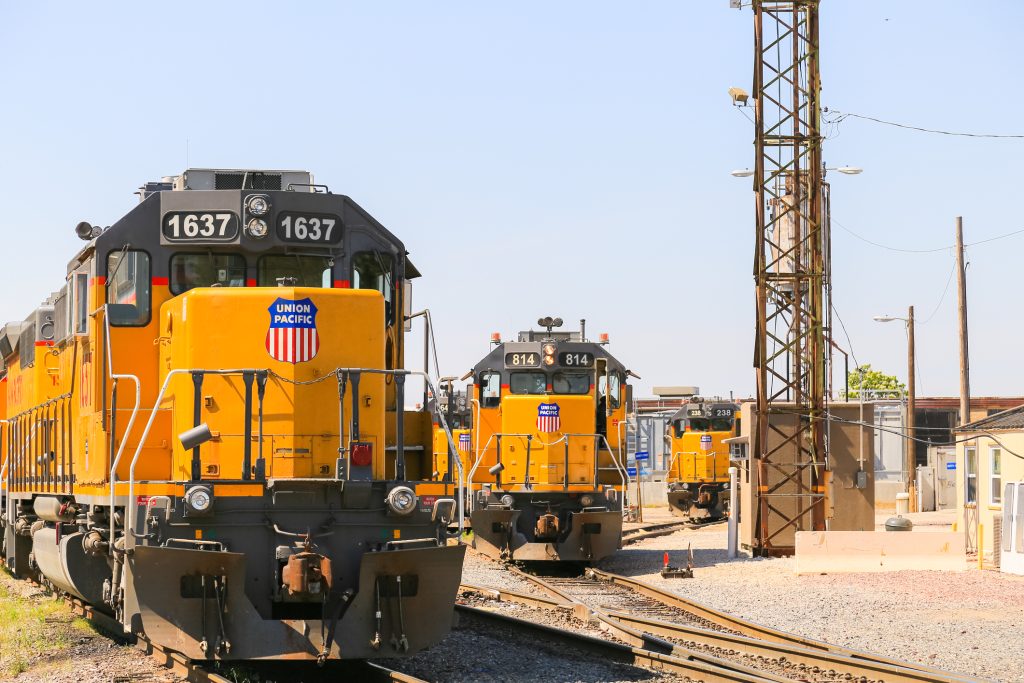
For anyone accustomed to finished vehicle logistics in Europe or other parts of the world, the North American rail network can appear to operate by a completely different set of rules.
The distances are greater. The terminology is different. The equipment is highly specialised. Rail plays a far more prominent role in long-distance inland distribution, and vehicles can pass through a series of ramps, terminals, interchange points and logistics operations before reaching their final destination.
From the outside, it can look like a uniquely North American process.
From a vehicle quality perspective, however, is it really so different?
Different scale, different language
There are good reasons why North American rail feels different.
Geography is perhaps the most obvious. Manufacturing plants, ports, vehicle distribution facilities and destination markets can be separated by enormous distances. Moving significant volumes of vehicles efficiently across those distances creates a natural role for rail.
The physical operation also looks different.
Purpose-built enclosed autoracks, specialised loading and unloading processes, rail ramps and transfers between railroads create an operating environment very different from a European road movement or a short-sea journey.
Then there is the language.
Terms such as ramps, autoracks and interchange can reinforce the impression that North American rail sits in its own category within global finished vehicle logistics.
But strip away the terminology and scale and something interesting happens.
The fundamental vehicle quality process starts to look very familiar.
A vehicle is received. Its condition is established. Custody changes. It is moved. It is handed over again. Its condition is checked again.
And if damage is discovered, the same fundamental questions have to be answered:
When did it happen? Where did it happen? Why did it happen? And who had custody at the time?
The mode changes. The fundamentals don’t.
A vehicle doesn’t know whether it is travelling by rail across North America, by road through Europe or through a port as part of an international deep-sea movement.
The risk profile may change, but the underlying causes of damage remain recognisable.
Vehicles still have to be driven, loaded, positioned, stored and unloaded. People interact with them. Equipment operates around them. They pass through constrained spaces. They are exposed to weather and environmental conditions. Operational pressure increases when volumes rise or networks become congested.
Every additional physical movement creates exposure.
And every custody change creates another critical point in the vehicle’s quality history.
That suggests another way of looking at the North American rail system.
Rather than seeing it purely as a transport network, perhaps we should also think of it as a quality handover network.
Every handover creates risk – and evidence
At every significant handover, there is an opportunity for damage to occur. But there is also an opportunity to establish the condition of the vehicle.
That second point is becoming increasingly important.
Consider a vehicle that travels successfully through several stages of a rail-based journey before damage is identified at destination.
The immediate question is usually: who caused it?
But answering that question retrospectively can be difficult.
Claims and quality teams may need to work backwards through inspection reports, damage codes, photographs, timestamps and custody records to determine when the vehicle’s condition changed.
The greater the number of movements and handovers, the greater the potential ambiguity.
This is where technology is beginning to change the process.
Making the handover visible
Digital inspection tools already allow condition information to be captured and transmitted much more efficiently than traditional paper-based processes.
The development of mobile imaging systems and fixed or drive-through vehicle scanning takes this further.
At a critical handover point, a vehicle can potentially have a detailed digital condition record associated with its VIN, location and time of inspection.
Do this consistently throughout the journey and we begin to create something much more valuable: a digital condition history of the vehicle.
AI can accelerate the next step
Scanning and digital inspection create evidence.
Artificial intelligence can potentially help the industry analyse that evidence at a speed and scale that would be difficult to achieve manually.
AI-assisted image analysis can help identify differences between condition records, classify potential damage and focus attention on the stage of the journey where a change appears to have occurred.
That does not mean an algorithm should automatically determine contractual or legal liability.
There will still be commercial agreements, operating standards and other evidence to consider.
But if technology can identify the probable point at which a vehicle’s condition changed, the claims teams can begin their investigation with considerably better information.
The result should be faster investigation, less ambiguity and greater operational efficiency.
But focusing only on claims would underestimate the real opportunity.
When claims become quality intelligence
North America’s scale can make damage management complicated.
It can also make it extremely valuable from a data perspective.
Large numbers of vehicles repeatedly travelling through defined routes, terminals and operating processes generate significant amounts of information.
If condition data can be combined with operational data, individual damage incidents stop being isolated events.
Patterns can begin to emerge.
Does a particular flow experience an unusual level of wheel damage?
Does the incidence of damage increase at a particular location when throughput reaches a certain level?
Are particular vehicle types experiencing repeated damage at the same stage of the journey?
Does one handover, loading process or operational combination consistently generate a higher level of quality exceptions?
Viewed individually, these are claims.
Viewed collectively, they are risk intelligence.
And that distinction could fundamentally change how vehicle damage is managed.
From reactive to proactive
Historically, much of damage management has necessarily been retrospective.
A vehicle is damaged. The incident is recorded. The evidence is examined. Liability is investigated. A claim is processed.
Better digital condition data can make that process faster.
Real-time data and AI offer the possibility of going further.
If an organisation can identify patterns across thousands of vehicle movements, it can begin to understand where quality risk is increasing within a live network.
The next step is to ask whether those patterns can help predict where future damage is most likely to occur.
A particular route may be developing an adverse trend.
A terminal may be approaching a level of activity historically associated with increased damage.
A particular vehicle configuration may present greater risk within a specific process.
Instead of discovering the pattern after another series of claims, the logistics team could potentially intervene while vehicles are still moving through the network.
That is the transition from damage administration to active quality management.
Different – but fundamentally the same
North American rail looks different because, in many respects, it is different.
Its geography, scale, specialised equipment, terminology and operating environment create a distinctive finished vehicle logistics network.
But beneath that complexity is the same process found throughout global automotive logistics:
Establish condition. Transfer custody. Move the vehicle. Establish condition again. Identify change. Understand the cause. Learn from it.
The mode changes.
The scale changes.
The terminology changes.
The fundamentals of damage management do not.
And as scanning, real-time condition data and AI make those handovers increasingly visible, the enormous scale of North American rail may become more than a quality-management challenge.
It could become one of the industry’s richest sources of intelligence for understanding – and ultimately preventing – vehicle damage.
